How Sales and Purchases Affect Accounting: Receivables, Payables and Business Records
How Sales and Purchases Affect Accounting: Receivables, Payables and Business Records
A shopkeeper might sell NPR 40,000 worth of goods in a day but collect only NPR 25,000. The sales figure looks good. The cash drawer tells a different story.
The same thing happens with purchases. A supplier delivers stock today, but the shop doesn't have to pay until next week.
Both transactions count, even though some of the money hasn't changed hands.
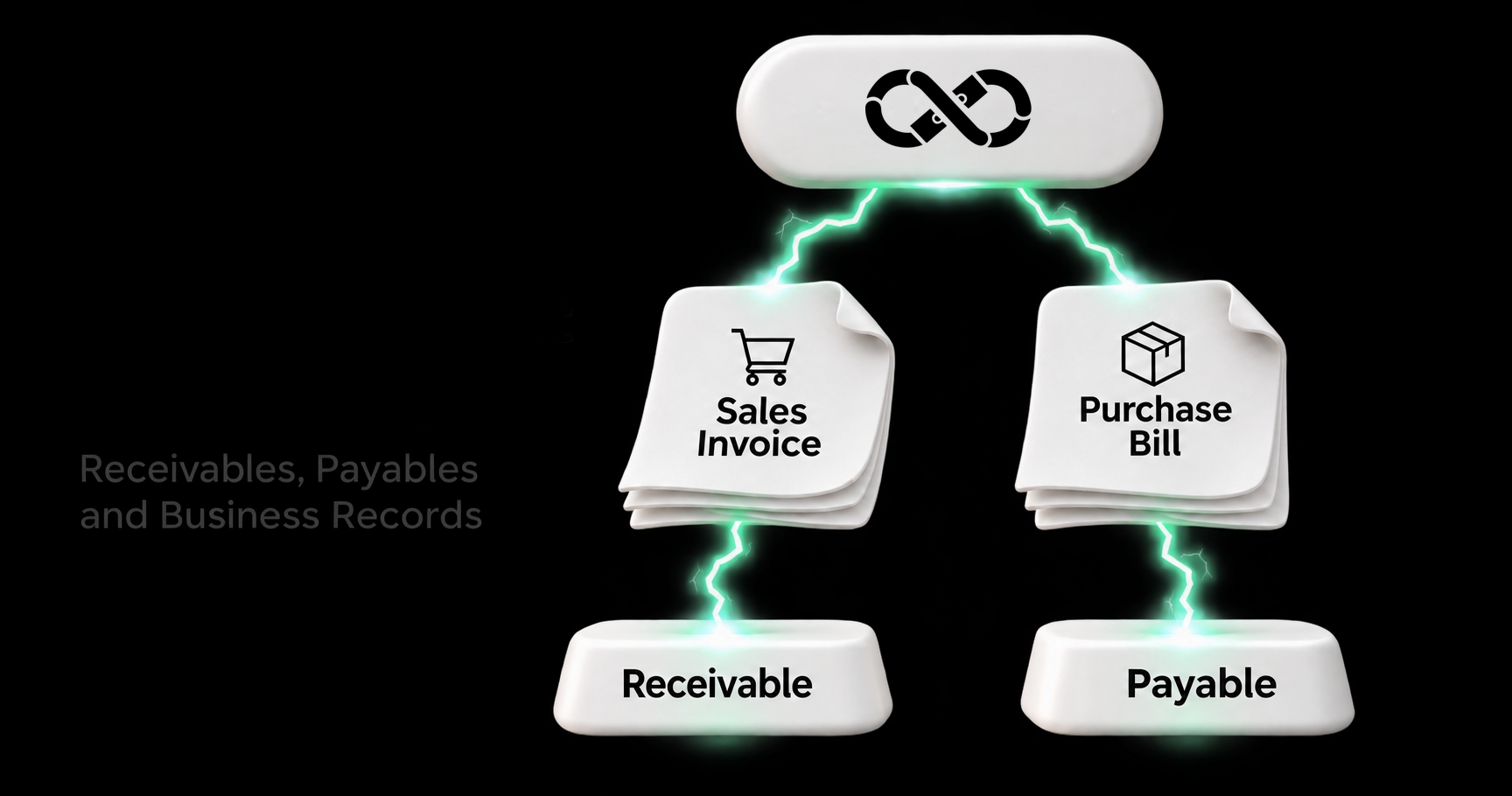
In accrual accounting, sales record revenue earned, purchases record goods or services bought, accounts receivable represents money customers owe, and accounts payable represents amounts the business owes suppliers.
For anyone starting out, our guide on what accounting means for businesses in Nepal explains the basics.
A sale doesn't always mean cash in hand
Think about customers who buy on udharo, a common practice in Nepali shops.
When a shop sells goods on credit, it records the sale and the amount the customer has yet to pay. That unpaid balance is called accounts receivable.
Once the customer makes a payment, the amount receivable goes down and cash increases.
There's an important detail here. If a customer pays for last week's purchase today, the shop shouldn't record another sale. The sale was already recorded; today's transaction is simply a payment against it.
Keeping sales invoices and customer payments connected makes it easier to see which customers have paid and which bills are still pending.
What happens when stock arrives before payment?
Now look at the supplier's side.
Suppose a shop receives NPR 30,000 worth of goods but is allowed to pay later. The stock belongs in its inventory, while the amount owed becomes accounts payable.
When the shop eventually pays the supplier, its payable balance decreases. It isn't a new purchase.
Buying stock also doesn't automatically mean the shop has incurred that entire amount as an expense. Under a perpetual inventory system, goods held for resale remain inventory until sold, when their cost is recorded as cost of goods sold.
This is one reason purchase bills and stock records should be checked together.
Receivables and payables: What's the difference?

These two terms are easy to mix up, particularly when a business buys from suppliers and sells to customers on credit.
| Term | Meaning | Accounting category |
|---|---|---|
| Accounts receivable | Money customers owe the business | Asset |
| Accounts payable | Money the business owes suppliers | Liability |
A useful way to remember them: receivables are amounts to collect; payables are amounts to pay.
A Kathmandu shop example
Let's follow the money through four transactions.
A retailer sells goods worth NPR 40,000 on credit and purchases stock worth NPR 30,000, also on credit. A few days later, the customer pays NPR 25,000. The shop pays NPR 10,000 to its supplier.
The remaining balances are:
| Record | Calculation | Amount |
|---|---|---|
| Customer receivable | 40,000 − 25,000 | NPR 15,000 |
| Supplier payable | 30,000 − 10,000 | NPR 20,000 |
| Net cash movement | 25,000 − 10,000 | NPR 15,000 increase |

The shop collected NPR 15,000 more cash than it paid out through these transactions. But that doesn't tell us whether it made a profit.
We still don't know the cost of the goods sold or the shop's other expenses. Those figures matter when calculating profit.
The distinction is worth remembering: sales, money collected and profit are three different figures.
This example assumes accrual accounting and excludes VAT, returns, opening balances and other transactions.
Keeping sales and purchase records organized
A good record should help answer a question without having to search through old bills.
If a customer disputes an outstanding balance, the shop should be able to find the original invoice and payments made against it. The same applies when a supplier asks about an unpaid purchase bill.

That means keeping sales invoices, supplier bills, receipts, bank payments, customer balances and supplier balances in order.
Sales and purchase registers bring these transactions together for review. VAT-registered businesses also have specific tax recordkeeping obligations. We've covered that separately in our guide to VAT registers and Annex 13 reporting in Nepal.
One useful habit is to check outstanding balances regularly. Finding a missing payment while the transaction is still fresh is much easier than sorting it out months later.
Managing sales and purchases with Billtize
At Billtize, we bring billing, purchasing, customer payments, supplier payments and inventory into one cloud-based system.
Our accounting software for businesses in Nepal includes ledgers, account information and financial reports that help businesses review their records.
The Billtize dashboard displays Sales, Purchase, Receipt and Payment as separate figures. These totals serve different purposes. Sales and purchase figures show business activity, while receipts and payments show money moving in and out.

With sales and purchase registers available in the same system, businesses can also review transaction details without maintaining several disconnected records.
Frequently asked questions
Is money received from an old credit sale counted as new revenue?
No. Under accrual accounting, revenue is recorded when earned. Collecting an outstanding payment reduces the customer's receivable balance.
Does purchasing stock on credit immediately reduce profit?
Usually not when the goods are held for resale under an accrual inventory system. The stock is recorded as inventory, and its cost is recognized as an expense when the goods are sold.
How can I check what customers owe and what I still need to pay suppliers?
Compare each customer's invoices with payments and adjustments already recorded. Do the same with supplier purchase bills. The remaining balances show what is receivable and payable.